
Pastor Aaron

Subversive Seeds – Mark 4:26-34

Mark 4:26-34

He also said, "The kingdom of God is as if someone would scatter seed on the ground, and would sleep and rise night and day, and the seed would sprout and grow, he does not know how. The earth produces of itself, first the stalk, then the head, then the full grain in the head. But when the grain is ripe, at once he goes in with his sickle, because the harvest has come."

He also said, "With what can we compare the kingdom of God, or what parable will we use for it? It is like a mustard seed, which, when sown upon the ground, is the smallest of all the seeds on earth; yet when it is sown it grows up and becomes the greatest of all shrubs, and puts forth large branches, so that the birds of the air can make nests in its shade."

With many such parables he spoke the word to them, as they were able to hear it; he did not speak to them except in parables, but he explained everything in private to his disciples.


Not too long before I moved away from Paducah, Kentucky I performed in our community theatre’s production of the musical Godspell. In Godspell, Jesus and his friends take turns singing and acting out random parables taken from the Gospel of Matthew. The production concludes with a portrayal of Jesus’ death on the cross.
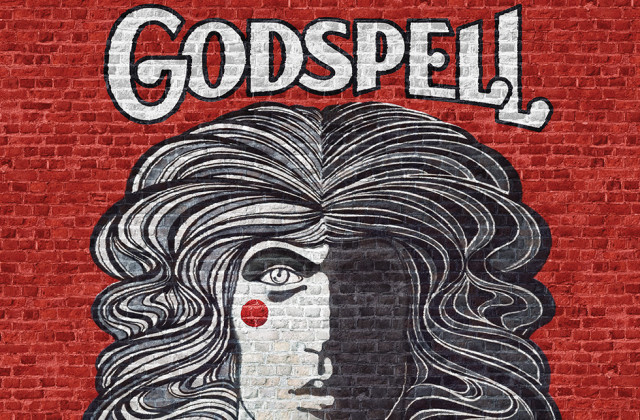
After each curtain call, our ensemble gathered at the foot of the stage to speak with the audience as they departed. I was surprised to see that so many people were moved to tears by the production. My fear was that the theater-goers with wads of wet tissues in hand were crying because my singing and dancing was so bad! However, they always said they were crying because of the powerful crucifixion scene.

What I wondered was whether anyone ever put it all together; that is, whether they realized that the sequence of parables, although seemingly-random, should have been just as powerful as the crucifixion scene because the parables were elements of Jesus’ life and teaching that set him on the path of death on the cross.

I don’t think they picked up of this because our director wanted to emphasize the unjust and absurd anger demonstrated by Jesus’ enemies. The powerful image in her mind was that of a completely innocent, loving, and even comical Jesus being killed for no reason. No wonder it brought up such an abrupt and jarring sense of loss, mourning, and pain in the audience.

Consequently, the audience witnessed a collection of little parables followed by an abrupt and unjustified murder.

The problem, though, is that Jesus’ murder wasn’t unjustified.

Jesus’ murder was completely justified; if your understanding of justice is that the people who have the most wealth and power and privilege get to make and enforce all the rules.

Jesus’ murder was the culmination of years of ministry and teaching that subverted power in favor of weakness, material abundance in favor of spiritual abundance, exclusion in favor of inclusion, and law in favor of grace.

Take today’s parable about the mustard seed.

Imagine a friend or even some random person came up to you and said, “You know, our faith is like a mustard seed; even the smallest amount can grow into something amazing and fruitful.” Well, that’s a nice and heart-warming sentiment, right? That’s a parable you could share with someone who needs some encouragement. You could even share that with someone who is doubting their faith.

But look at this parable from the perspective of the oppressive rulers in Jesus’ time. Imagine that you have all the power in the world, and all the region under your thumb. You hear of a charismatic individual who is amassing huge crowds wherever he goes. And the message he’s bringing to the hoards of people is that people who have faith in God may feel small and insignificant, like a mustard seed; but that their God will nurture that seed and raise them into “the greatest of all shrubs…[with] large branches.” For people of power, that’s anything but good news; that is a whisper of rebellion and revolution.

One parable paints the picture of salvation for some, and doom for others…all depending on how much power each one tries to wield in the face of the real power of God’s kingdom.

And that’s not the only way this parable is subversive!

Let’s think about this mustard plant that Jesus mentions. I found an article that says mustard “was a lot less like a flowering shrub that we might plant around the edges of our property as an accent than it was an invasive weed, something you want to keep out of your garden and lawn at all costs because it runs amok easily, gets out of hand, and nearly takes over whatever ground it infests.”*

Jesus says the kingdom of God is a lot like an invasive weed. That’s good, I guess, because that means it’s something that grows and spreads naturally. Our faith cannot be confined to one area of our lives, or one hour a week. We can’t do much to encourage its growth (nor remove it completely). In fact, most weeds grow best the worse the soil is.

But there’s a dark side to having a weedy faith…because that means our faith cannot be confined to one area of our lives or one hour a week. This weedy, invasive faith will change us. Our faith will propel us into adventures and relationships we’d never expect (and probably never seek out), challenge our assumptions about right and wrong, impact people around us, and open our eyes to a new and greater reality.

And those aren’t the only ways this parable is subversive! Here’s one more…

Do you remember what was to benefit from the shade of the mustard plant? (Birds of the air).

But listen to this. Prior to this parable about the mustard seed, Jesus tells another parable about a sower sowing seeds. Some are sown on good soil and grow to abundance, others were sown among thorns, where they were choked out; others fell on rocky soil, where the sun withered them because they had shallow roots; others fell on the path, where birds came and snatched up the seeds.

These seed-snatching birds could very well be the same birds that find shelter in the shade of the mustard plant.

So, what if Jesus meant to say that the very people who you feel are the biggest threat to your faith are actually the people whom you faith should benefit the most? One of my seminary professors writes, “These birds might be the undesirables, the folks decent people avoid, the ones we prefer to keep on the other side of our street and, preferably, outside our homes. Yet across Mark’s Gospel it just these people who flock to the kingdom Jesus proclaims.”*

My hope is that you see how parables such as this seemingly-innocent one about a mustard seed subverts power in favor of weakness, material abundance in favor of spiritual abundance, exclusion in favor of inclusion, and law in favor of grace. These seemingly-innocent parables are what got Jesus killed. These seemingly-innocent parables are keys to recognizing God’s remarkable and disruptive kingdom that is the true source of power and life in our world.

The same parable can inspire you one day, and terrify you the next. That’s how you know God is speaking to you and that God has something to say.

Amen.


* David Lose, "Pentecost 3B: Preach the Truth Slant" (http://www.davidlose.net/2015/06/pentecost-3-b-preach-the-truth-slant/)

"2 a.m. Pentecost Prayer" – Acts 2:1-21

Acts 2:1-21

When the day of Pentecost had come, they were all together in one place. And suddenly from heaven there came a sound like the rush of a violent wind, and it filled the entire house where they were sitting. Divided tongues, as of fire, appeared among them, and a tongue rested on each of them. All of them were filled with the Holy Spirit and began to speak in other languages, as the Spirit gave them ability.

Now there were devout Jews from every nation under heaven living in Jerusalem. And at this sound the crowd gathered and was bewildered, because each one heard them speaking in the native language of each. Amazed and astonished, they asked, "Are not all these who are speaking Galileans? And how is it that we hear, each of us, in our own native language? Parthians, Medes, Elamites, and residents of Mesopotamia, Judea and Cappadocia, Pontus and Asia, Phrygia and Pamphylia, Egypt and the parts of Libya belonging to Cyrene, and visitors from Rome, both Jews and proselytes, Cretans and Arabs—in our own languages we hear them speaking about God's deeds of power."

All were amazed and perplexed, saying to one another, "What does this mean?" But others sneered and said, "They are filled with new wine." But Peter, standing with the eleven, raised his voice and addressed them, "Men of Judea and all who live in Jerusalem, let this be known to you, and listen to what I say. Indeed, these are not drunk, as you suppose, for it is only nine o'clock in the morning. No, this is what was spoken through the prophet Joel: "In the last days it will be, God declares, that I will pour out my Spirit upon all flesh, and your sons and your daughters shall prophesy, and your young men shall see visions, and your old men shall dream dreams. Even upon my slaves, both men and women, in those days I will pour out my Spirit; and they shall prophesy. And I will show portents in the heaven above and signs on the earth below, blood, and fire, and smoky mist. The sun shall be turned to darkness and the moon to blood, before the coming of the Lord's great and glorious day. Then everyone who calls on the name of the Lord shall be saved.


It’s 2 o’clock in the morning; do you know where your pastor is?

At 2am Wednesday morning I was lying down on the couch, unable to sleep. It was a frustrating experience, not only because of being so exhausted, but more so because of the thoughts and ideas that were keeping me awake, which I couldn’t shake out of my head.

Something rather insignificant happened earlier that day that made me think of myself as a failure in one particular area of my life. Once that thought pried its way into my mind, it infected my thoughts about parenting, marriage, work, friendship, and many more. My mind was like that scene from Ghostbusters, where the ghosts escaped their containment and terrorized the streets of New York City. You know, like this:

Lying awake at 2am, having listened to the same mental message playing on repeat for three hours, being exhausted and furious at my inability to stop the voice in my mind, I finally decided to pray.

You might like to think that your pastor wouldn’t wade through three hours of emotional frustration before turning to prayer. You might like to think that your pastor wouldn’t engage in prayer only as a last resort. However, in that particular situation, that’s exactly how I handled it.

The prayer was a simple one –something like, “Lord, help me realize I am more than my failures.” And it was in this act of prayer that I was finally able to hear and believe a different mental message – the message that I was a beloved creation of the Holy God and that God had promised to be with me.

It is not always easy to believe or even remember God’s promise to be a part of us, particularly when there are so many voices in our world both “out there” in the world and “in here” in our own minds. It sounds unbelievable to claim that the God who created the heavens and the earth would ever choose to make a home in our bodies.

And yet, the creation stories in Genesis tell of a God who formed human beings in God’s own image and filled them with the divine breath. Scripture begins with a claim on our bodies – that it is God’s own presence that brings each one to life.

Scripture is also filled with story upon story of people choosing to look outside of themselves to feel God. For instance, when the Hebrew people built a temple. “On the day of the dedication of "Solomon's Temple," the glory of Yahweh (as fire and cloud from heaven) descended and filled the Temple (1 Kings 8:10-13)....[The temple became the residence and visible reminder of God’s presence] for the Jewish people. This naturally made Solomon's Temple both the center and centering place of the whole world, in Jewish thinking.

But in 587 BC, the Babylonians tore down the Temple and took the Jews into exile. As Father Richard Rohr writes, “[This destruction] prompted a crisis of faith. The Temple was where God lived! So Ezra, Nehemiah, and Jeremiah convinced the people that they must go back to Jerusalem and rebuild the temple so God can be with them again. There is no account of the fire and glory of God ever descending on this rebuilt temple.”

He continues, “The absence of visible glory [of Yahweh] must have been a bit of an embarrassment and worry for the Jewish people. This could explain the growth of Pharisaism, a belief strong in Jesus' time that if they obeyed laws more perfectly--absolute ritual, priesthood, and Sabbath purity--then the Glory of God would return to the Temple. This is the common pattern in moralistic religion: our impurity supposedly keeps Yahweh away. They tried so hard, but the fire never descended. They must have wondered, "Are we really God's favorite and chosen people?”

At 2am earlier this week, I felt a lot like those believers who couldn’t sense God’s presence in their new temple. My hours of frustration and desperation and only being able to think of myself as a failure left no room for God’s presence. I felt alone.

At yet, in my experience of anxiety, something prompted me to pray and connect with the truth that I had been taught so long ago: that God’s love for me overcomes all my mistakes and feelings of failure. God hadn’t abandoned me, and God never would.

And so I prayed, just as Jesus’ followers prayed when they gathered following Jesus’ resurrection and ascension; just as Jesus’ followers prayed when all of the sudden there came a sound like the rush of a violent wind and “the fire from heaven descended, not on a building, but on people! And all peoples, not just Jews, were baptized and received the Spirit (Acts 2:38-41).”

The story of the disciples being filled with the Spirit on the Day of Pentecost tells us that the new temple of God is the human person – just as it was in the beginning, when God breathed into the first man.

Gathering on this Day of Pentecost, we hear the stories of fire and prayer and amazement and are challenged to claim these stories as our own. We hear Jesus’ promise to send the Advocate to bear his presence in a world so concerned about labeling people as right and wrong, sinner and righteous, just and unjust.

God is present in this world, actively working in all people, especially those who are consumed with fear and feelings of failure. God’s presence and promises are ultimately the only thing to which we can ever hope to cling And that is enough.


quotes from Richard Rohr, "The Evolution of the Temple" from Richard Rohr's Daily Meditation email dated April 20, 2015.