
Pastor Mark

The Average Jesus

It never hurts to start with a laugh. So I thought I’d share with you something I came across recently by way of Facebook – the source of all the best sermon fodder. 

It is a collection of celebrity portraits put together by an artist named Danny Evans. But these aren’t just any celebrity portraits. The premise of this collection, or of this project, or whatever you want to call it, is to have created images of what celebrities might look like if they weren’t celebrities… if they didn’t have stylists and personal shoppers; if they didn’t get paid to exercise; if they didn’t have access to wardrobe changes between breakfast, lunch, and dinner; or maybe, if they never got “discovered,” and made it to the big time, in the first place.

So, imagine an average Tom Cruise…
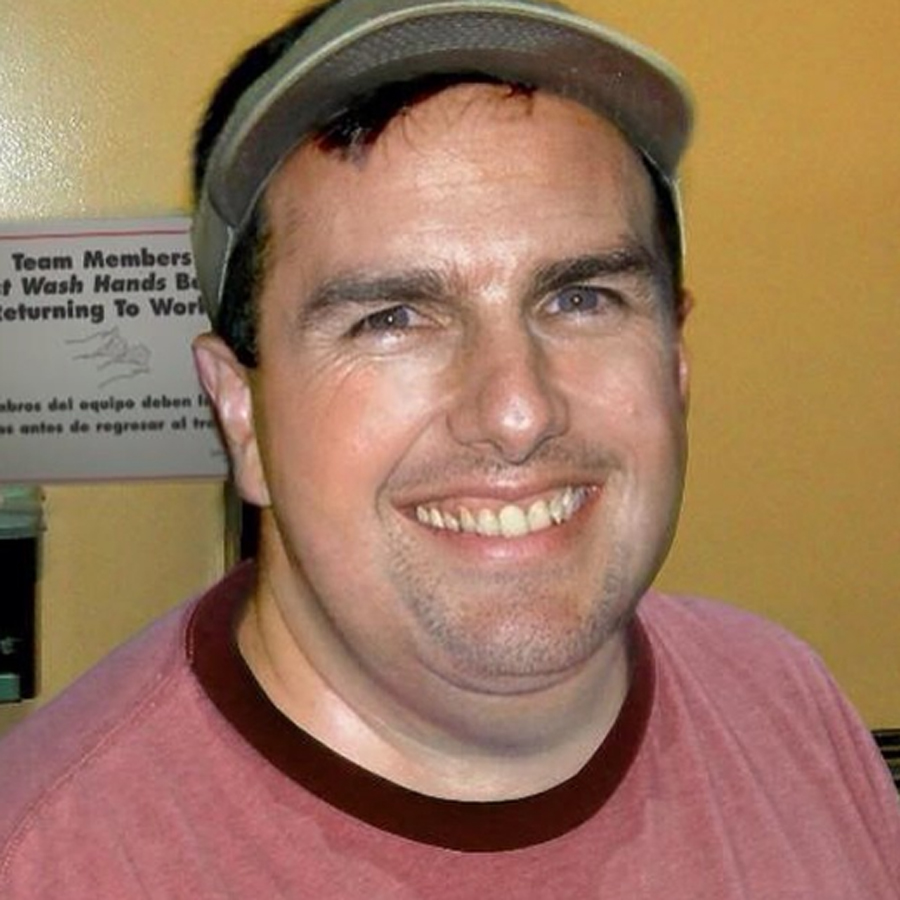
CMas Eve - Tom Cruise.jpg

Or an everyday Rihanna…

CMas Eve - Rihanna.jpg

What about a run-of-the-mill Miley Cyrus…

CMas Eve - Miley C.jpg

Or Jennifer Anniston, as a cat-lady…

CMas Eve - Anniston.jpg

And what about some Power Couples, without so much clout:

Like Jay-Z and Beyonce

CMas Eve - JZ and B.jpg

Or, Brad Pitt and Angelina Jolie…

CMas Eve - PittJolie.jpg

Now I would bet all of Jay-Z’s money that this photoshop artist didn’t set out with a theological agenda when he put these portraits together. I don’t even think he meant to make a social statement of any significance. I’m pretty sure he was just having a little fun. But I saw these pictures and thought about them as a twist on the message of Christmas and the Good News that brings us here tonight.

See, I believe what God did through the birth of Jesus – when God set the divine loose in the world, in and through the flesh and blood and bones of a person – it was something like what we see in those pictures: The high, brought low. The mighty, made plain. Power made perfect in weakness… meekness… humility… and grace. Beauty that is simple and pure and unadorned … messy and imperfect and ugly, even, by the world’s estimation.

Because all of that is who and how God is in Jesus – a baby in a manger – meek and humble; plain and unembellished; weak, not strong; messy, not fit for the red carpet; poor, not rich; more generous than greedy; more concerned about peace than power; more willing to suffer and to struggle and to sacrifice than to win, win, win, win, win at all costs.

See, too much of Christendom does with God, in Jesus, what our culture does so much of the time with celebrities. We make Jesus into something he’s not – Caucasian, just for starters. And other things he was never meant to be, too: always robed in white … shrouded in a halo of light … with soft hands made for “chalices, not callouses,” as a friend of mine likes to joke.

Like this:

CMas Eve - Jesus c.jpg

Or this, on a night like tonight:

CMas Eve - Jesus b.jpg

Or this:

CMas Eve - Jesus a.jpg

When really, smarter people than me suggest Jesus was something a lot more like this:

CMas Eve - Real Jesus Snot.jpg

Or this:

CMas Eve - Real Jesus Teen.jpg

And this:

CMas Eve - Real Jesus d.jpg

And that’s important to remember as we celebrate his coming among us, because it reminds us about how and for whom he came, in the first place: the poor, the lost, the lonely; the outcast, the refugee; the sick, the prisoner, the oppressed, and so on.

But that can be hard for a middle-class white guy in central Indiana. I’m very clear about the fact that I don’t have a lot in common with Jesus, when it comes to the demographics on my driver’s license. I, frankly, don’t have a lot in common with the likes of those for whom Jesus came in the first place, either, to be honest … the poor, the blind, the deaf, the sick, the forsaken, the outcast, the refugee, the widow.

But the good news of Christmas – as hard as it is holy to hear sometimes – the good news in all of this is that none of it has much to do with what we look like on the outside, really. All of it – where most of us here are concerned – has to do with what’s going on in our heart of hearts. It has to do with the state of our souls. It’s all about how we can receive the gift that comes in Jesus and let it change us, transform us, and move us in the direction of God’s will – for our own sake – and for the sake of the world.

Because, if I’m honest about it all, I have my own fish to fry, outside of all the poverty or sickness or safety that so many others have to worry about in this world. I have plenty of my own reasons to be grateful for all the ways Jesus shows up for my sake at Christmas.

See, my poverty might just look exactly like the money I pretend brings status and security in my life. (It does neither.) My blindness might be the privilege I take for granted or take advantage of without apology too much of the time. My deafness might be my refusal to hear and respond to the cries of those in need around me. I might very well be a refugee in God’s eyes, because of the barriers that keep such a distance between my life and the lives of so many of God’s people. I am certainly a prisoner, as far as God is concerned … bound by sin, as we all are; by so many things done and left undone in the world as we know it to be.

Bah humbug, right?!?! But bear with me… there is so much hope in the cosmic craftiness of God’s Christmas plan.

Because, the beauty of God’s work in Jesus – when we remember to see ourselves and each other and the world around us all wrapped up in the likes of that baby in the manger – is that when we do our faithful best to respond to the gift of his coming, we are changed for the better and the world around us is transformed, just the same.

I mean when we give generously… When we welcome strangers… When we sacrifice for others, comfort the sick, work for justice, pray for peace… the kingdom of God comes among us, the kingdom of God comes through us, the kingdom of God is born, in our midst, on the daily, for the sake of the world.

Christmas is about recognizing the God of all creation in the average, every day, sinner among us. Christmas is about recognizing the God of all creation in the average, every day, sinner in the mirror. Christmas is about seeing God in the needs that surround us in as many ways as there are people in this room – and then some.

And Christmas is about celebrating that God – through the life, death and resurrection of Jesus – inspires and invites the likes of you and me to do something to meet all of those needs, until all are fed; until all are healed; until all are safe … along with the grace, mercy, forgiveness and hope we need, in the meantime.

Amen. Merry Christmas.

Blue Christmas - Grief, Love, Andy and Nina - John 11:1-6, 17-44

John 11:1-6, 17-44

Now a certain man was ill, Lazarus of Bethany, the village of Mary and her sister Martha. Mary was the one who anointed the Lord with perfume and wiped his feet with her hair; her brother Lazarus was ill. So the sisters sent a message to Jesus, ‘Lord, he whom you love is ill.’ But when Jesus heard it, he said, ‘This illness does not lead to death; rather it is for God’s glory, so that the Son of God may be glorified through it.’ Accordingly, though Jesus loved Martha and her sister and Lazarus, after having heard that Lazarus was ill, he stayed two days longer in the place where he was.

When Jesus arrived, he found that Lazarus had already been in the tomb for four days. Now Bethany was near Jerusalem, some two miles away, and many of the Jews had come to Martha and Mary to console them about their brother. When Martha heard that Jesus was coming, she went and met him, while Mary stayed at home. Martha said to Jesus, ‘Lord, if you had been here, my brother would not have died. But even now I know that God will give you whatever you ask of him.’ Jesus said to her, ‘Your brother will rise again.’ Martha said to him, ‘I know that he will rise again in the resurrection on the last day.’ Jesus said to her, ‘I am the resurrection and the life. Those who believe in me, even though they die, will live, and everyone who lives and believes in me will never die. Do you believe this?’ She said to him, ‘Yes, Lord, I believe that you are the Messiah, the Son of God, the one coming into the world.’

When she had said this, she went back and called her sister Mary, and told her privately, ‘The Teacher is here and is calling for you.’ And when she heard it, she got up quickly and went to him. Now Jesus had not yet come to the village, but was still at the place where Martha had met him. The Jews who were with her in the house, consoling her, saw Mary get up quickly and go out. They followed her because they thought that she was going to the tomb to weep there. When Mary came where Jesus was and saw him, she knelt at his feet and said to him, ‘Lord, if you had been here, my brother would not have died.’ When Jesus saw her weeping, and the Jews who came with her also weeping, he was greatly disturbed in spirit and deeply moved. He said, ‘Where have you laid him?’ They said to him, ‘Lord, come and see.’ Jesus began to weep. So the Jews said, ‘See how he loved him!’ But some of them said, ‘Could not he who opened the eyes of the blind man have kept this man from dying?’

Then Jesus, again greatly disturbed, came to the tomb. It was a cave, and a stone was lying against it. Jesus said, ‘Take away the stone.’ Martha, the sister of the dead man, said to him, ‘Lord, already there is a stench because he has been dead for four days.’ Jesus said to her, ‘Did I not tell you that if you believed, you would see the glory of God?’ So they took away the stone. And Jesus looked upwards and said, ‘Father, I thank you for having heard me. I knew that you always hear me, but I have said this for the sake of the crowd standing here, so that they may believe that you sent me.’ When he had said this, he cried with a loud voice, ‘Lazarus, come out!’ The dead man came out, his hands and feet bound with strips of cloth, and his face wrapped in a cloth. Jesus said to them, ‘Unbind him, and let him go.’


Kate Braestrup is a law enforcement chaplain in Maine, a widow, and an author of some books I’ve just added to my pile of things “TO READ.” Her website calls her a “community minister,” too, though I’m not sure what that means exactly.

Anyway, she tells the story of Nina, a 5 year-old little girl, who wants to go visit her cousin Andy, which is only noteworthy because her cousin Andy – who is 4 years old – is dead. Andy was killed instantly when an all-terrain vehicle, driven by a neighbor, rolled over on him.

And Nina wanted to visit him … dead … at the funeral home.

Of course, Nina’s parents wanted to protect her. But Nina was sure and she was certain and she was determined. So Kate Braestrup, the wise, experienced chaplain, suggested that it might just be okay…that she didn’t think it would hurt Nina more to see him. And she was right.

On the day of this last goodbye, Nina’s mother said they drove their daughter to the funeral home where Nina jumped out of the car and marched inside like a little girl on a mission. Mom and dad rushed to keep up with her and stopped to prepare her before she entered the cold room where Andy’s body lay. They reminded Nina that Andy wouldn’t be talking. They explained that Andy wouldn’t be moving or getting up. Nina understood.

And when she got into the room, she walked right up to the dais where Andy lay, covered by a quilt his mother had made, and she walked around his body, putting her hands on him, like she was checking to see that he was all there. Then she put her head on his chest and talked to him. After 10 minutes or so, of what must have been a beautiful kind of agony for her parents, they asked Nina if she was ready to go. “No,” she told them. “I’ll tell you when I am.” And then she sang Andy a song. And then she placed a plastic, Fisher Price telescope into his hand, so that he could see anyone he wanted to see from heaven. 

And when she was ready to leave, Nina explained that, since he wasn’t going to be getting up, she needed to tuck him in. So she did. She walked all the way around the table again and tucked the quilt beneath him as she went. Finally, she put her hands on him and she said, “I love you Andy Dandy. Goodbye.”
 
The chaplain tells Nina’s story – with her family’s blessing and permission – so people will know that we can trust human beings with grief. As she puts it, we should “…walk fearlessly into the house of mourning, for grief is just love squaring up to its oldest enemy. And after all these mortal human years, love is up to the challenge.”

I haven’t heard a more beautiful, hope-filled thing in quite some time. “Walk fearlessly in the house of mourning, for grief is just love squaring up to its oldest enemy. And after all these mortal years, love is up to the challenge.”

Now, remember with me that Gospel story we heard a moment ago… For a long time now, I have read and heard and preached about Jesus back in Bethany, with Mary and Martha, confronting the death of Lazarus, as just a way to show the power of God in the face of death. I think that’s something like what Jesus meant when he told people “This illness does not lead to death; rather it is for God’s glory.” And I’m sure I’ve even acknowledged, too, the power and humanity of Jesus’ grief at the death of his friend. The Jews who saw Jesus were impressed by his tears and weeping and at how “greatly disturbed” he was to have lost his friend.

But when I heard Nina’s story – and with Christmas on the way – I wonder if Jesus’ mission that day in Bethany, wasn’t something like the mission of that little girl, whether she knew what she was doing or not. I wonder if the glory of God that was revealed through Lazarus’ death and in Jesus’ visit to him was as much about his grief as it was about his power to raise him from the dead. Together, the message is the same as Nina’s. And it is the message and comfort and hope of Christmas, too.

Grief is just love, squaring up to its oldest enemy …

and after all these mortal years, love is up to the challenge.

“… Love is patient. Love is kind. Love is not arrogant or boastful or rude. Love believes all things, bears all things, endures all things, hopes all things….”

I never know what brings each of us here on a night like tonight. Maybe it’s the grief of death and dying. Maybe it’s the loss of a job. Maybe it’s the frustration of addiction, a broken relationship, a recent diagnosis, a financial crisis, a struggling faith, an uncertain future. I hope some of you are here simply to stand beside and pray with and love others who need some help squaring up against their own grief.

Whatever the case, the invitation of Christmas is that each of us can walk fearlessly – or with less fear and anxiety perhaps, on our good days – into our mourning and sadness and fear when it comes. And I think our odds of doing that are better if we remember that grief (and whatever comes with it) is the depth of our love squaring up against its oldest enemy.

Grief is 5 year-old Nina walking into the funeral home to let her love for her cousin sing more beautifully than the power of his death.

Grief is Jesus making his way to Bethany, to let his love for Lazarus speak more loudly than his dying.

And it is God, born in the flesh – it is heaven come to earth – it is love come down – to square up against its oldest enemy: death and whatever fear and sadness and grief it brings.

And the Good News of Christmas – our hope in these days – is to remember that love wins … that “after all these mortal years” the love of God in Jesus, when it squares up against whatever grieves or scares or unsettles us most, is always… always… always up to the challenge.

Amen. Come, Lord Jesus.