Mark 3:20-35
Then he went home; and the crowd came together again, so that they could not even eat. When his family heard it, they went out to restrain him, for people were saying, ‘He has gone out of his mind.’ And the scribes who came down from Jerusalem said, ‘He has Beelzebul, and by the ruler of the demons he casts out demons.’
And he called them to him, and spoke to them in parables, ‘How can Satan cast out Satan? If a kingdom is divided against itself, that kingdom cannot stand. And if a house is divided against itself, that house will not be able to stand. And if Satan has risen up against himself and is divided, he cannot stand, but his end has come. But no one can enter a strong man’s house and plunder his property without first tying up the strong man; then indeed the house can be plundered.
‘Truly I tell you, people will be forgiven for their sins and whatever blasphemies they utter; but whoever blasphemes against the Holy Spirit can never have forgiveness, but is guilty of an eternal sin’ — for they had said, ‘He has an unclean spirit.’
Then his mother and his brothers came; and standing outside, they sent to him and called him. A crowd was sitting around him; and they said to him, ‘Your mother and your brothers and sisters are outside, asking for you.’ And he replied, ‘Who are my mother and my brothers?’ And looking at those who sat around him, he said, ‘Here are my mother and my brothers! Whoever does the will of God is my brother and sister and mother.’
So, Jesus is up to no good again – at least as far as the scribes from Jerusalem, the headquarters of the Temple – were concerned. They accuse him of working some kind of black magic, by the power of Beelzebul, to cure diseases and cast out demons, which Jesus tries to explain is preposterous … impossible, even. “Satan cannot cast out Satan,” he says. “A house divided against itself cannot stand,” he tells them. No, Jesus was stronger than the strong man, Satan. Jesus was the Son of God. Jesus was the one who’d come to tie up the evil one and plunder his property for the good of the world.
And, Satan wasn’t – Satan is not – some red-winged, hoof-footed, pitch-fork wielding creature from the Dark Side. That’s not a bad way to personify the evil Satan represents, because that image of the Devil has always scared the hell into me almost as much as the evil he represents. But no, the evil Satan represents – and to which Jesus refers, I believe – is scarier still. And that kind of evil and sin and darkness is anything and everything that gets in the way of the grace and love and light Jesus meant to bring into the world.
And this morning, that kind of sin and darkness is represented by anyone who misunderstands, who mis-represents, who tries to limit the kind of grace Jesus was trying to share.
And one of the ways Jesus seems to suggest sharing that kind of light … that kind of love … that kind of grace … in the world and for the people who followed him, was by re-defining who and how we might learn to call each other brothers and sisters, mothers and fathers, parents and children; how we might come to know one another as “family” in some unexpected, surprising and holy ways.
See, when his own mother, brothers, and sisters, come looking for Jesus in this morning’s Gospel – presumably to save him from himself, from the scribes, and from whatever trouble he’d gotten himself into this time around – they can’t even get to him. He’s surrounded by a crowd of faithful followers when his family shows up, and between those followers and his family, his accusers have set up camp, establishing a mote of mistrust and ugliness between them.
And when he hears that his family has come for him, he says, in effect, “who are you calling ‘my family?’ These people who get it are ‘my family.’ These people who love me are ‘my family.’” (I don’t think Jesus means any disrespect to his mother, Mary, and whatever of his siblings she may have had with her that day. But I think he’s adding to his circle – adding to his family – in a powerful way, just the same.) He’s saying that anyone who does the will of God, anyone who follows the Way of faith, anyone who walks in the ways of Jesus … those people – these ones closest to him – are counted among his brothers and sisters. They are his ‘family’ as much as anyone, whether they share the same blood, DNA, whatever.
And it made me think about some of my favorite families:

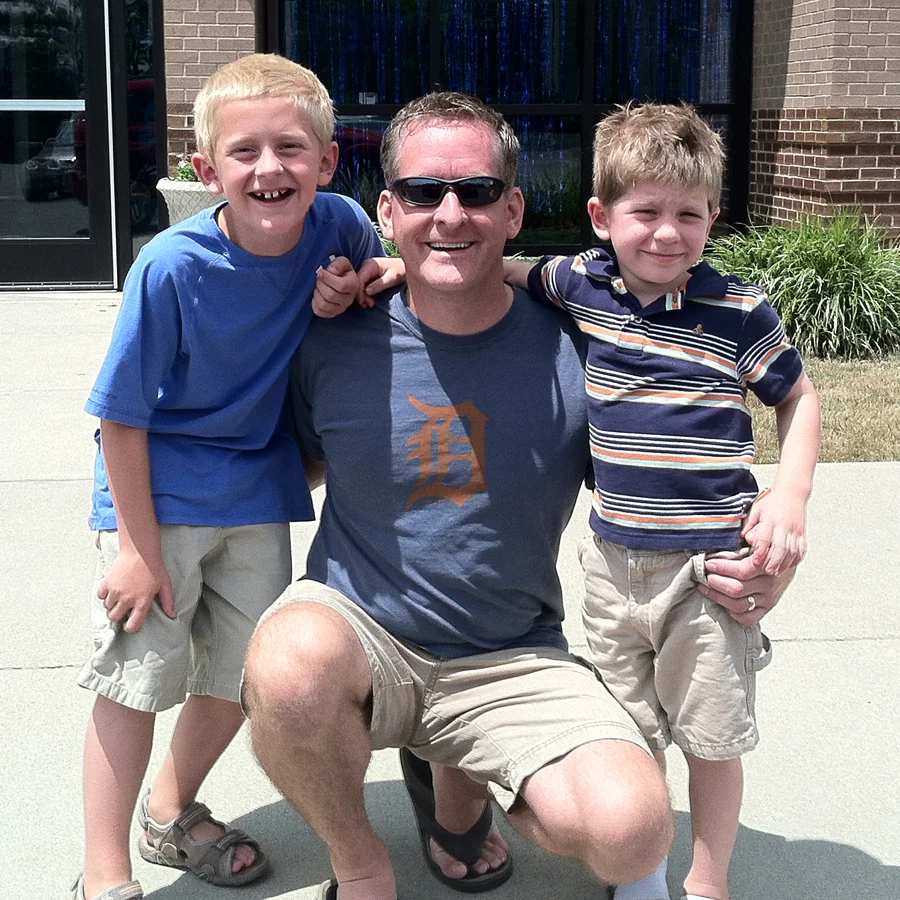
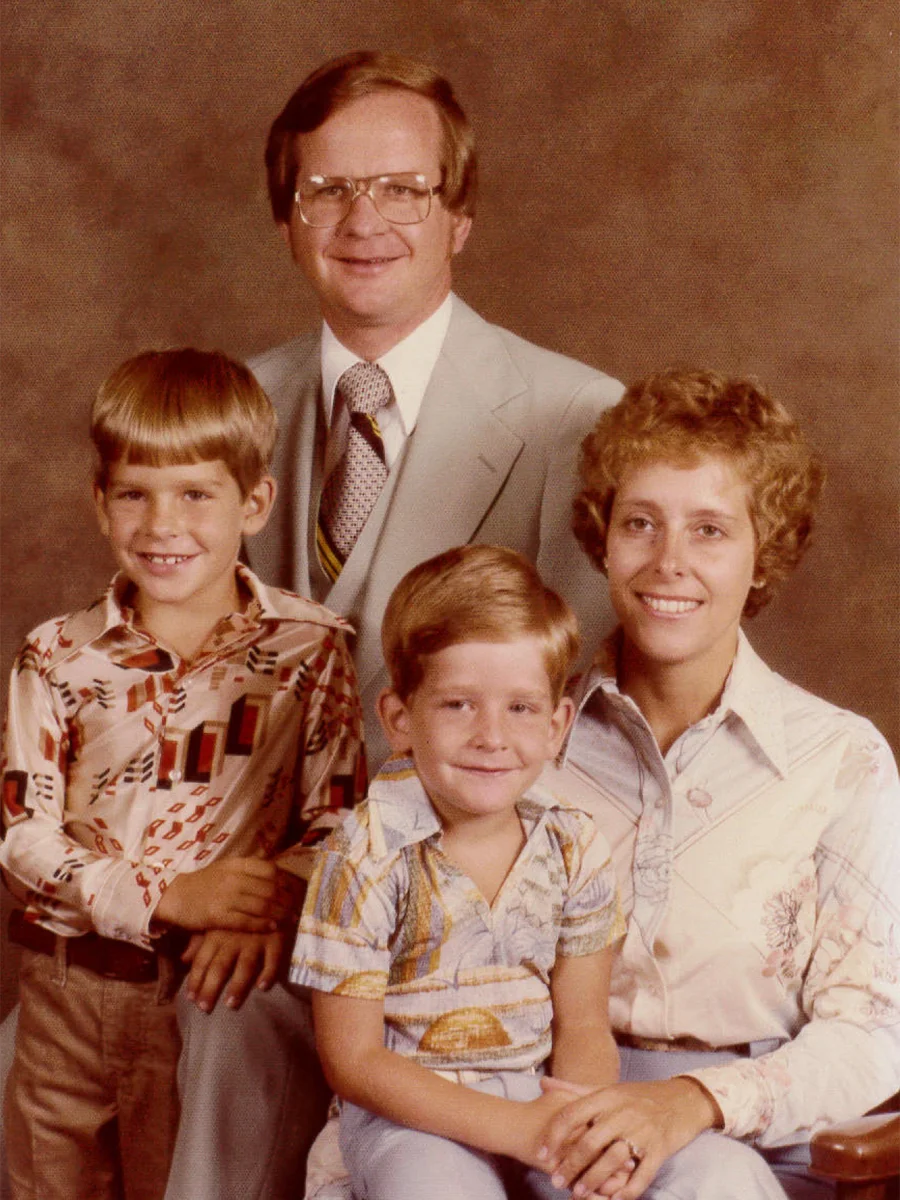
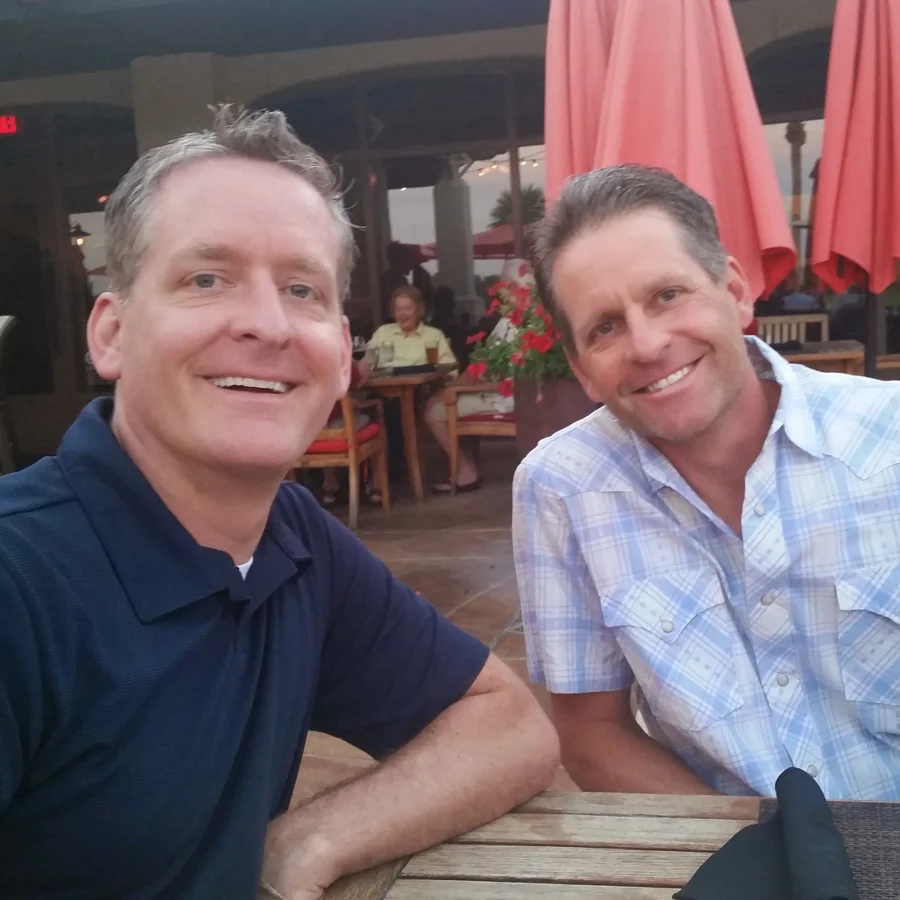
Some of you will remember The Schlegels. They moved away from Cross of Grace a few years ago. But I remember when Paul and Robin Schlegel (they're the short ones in the picture) got the call, as they were literally loading their family of four into the car to leave for vacation, and were told there were newborn, African-American twin girls, just born and ready for adoption if they wanted to come and get them. In the middle of what was a pretty brief deliberation considering the circumstances, Paul said something like “those little girls need a family.” So they purchased some car seats, picked up the girls at the hospital, loaded up another car, recruited three grandparents to join them, and started their new life together as a family of 6, on vacation in South Carolina. This is what brothers and sisters and family can look like when the love of God plays a part.
And here’s another one of my favorite families:
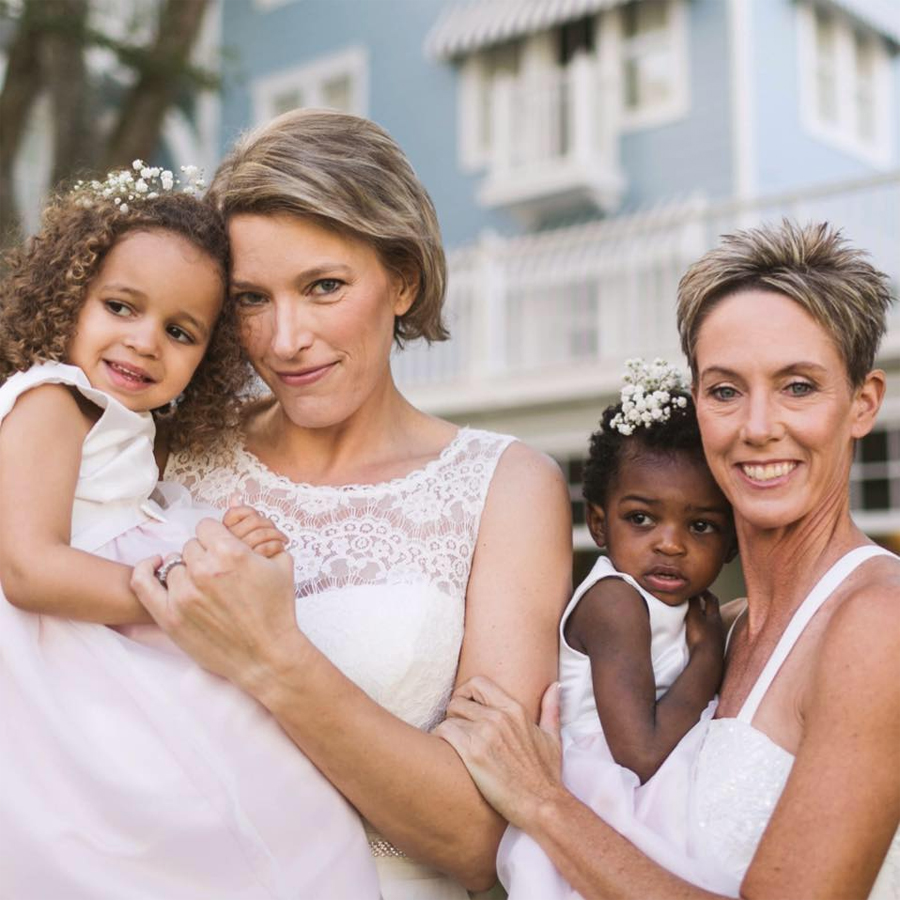
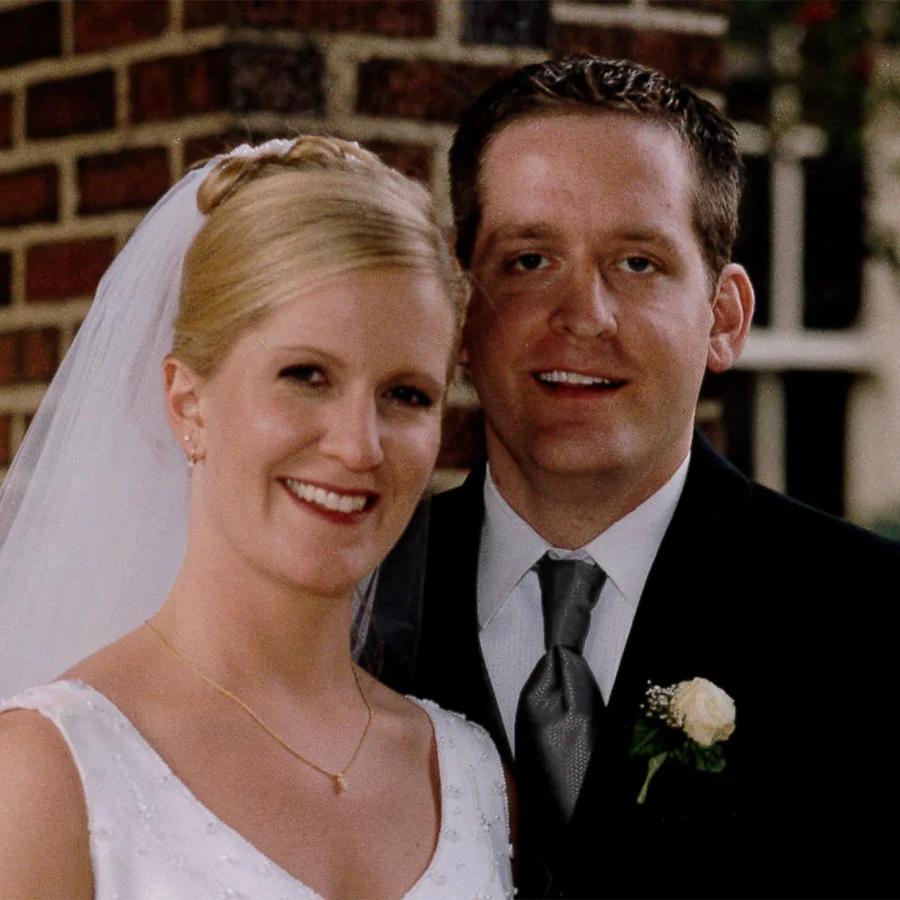
Our friends Kristi and Lisa established their family a little untraditionally, I guess you could say. After a hard road with artificial insemination, they lost their first little girl, Lucy, delivering her stillborn after 24 weeks in utero. After that, they embarked on their own journey to adopt Elle and then Zoë, over the course of several years. (These little girls don’t even know how good they have it, yet, getting to be raised as princesses - in every sense of the word - by two moms who are executives at Disney World.) Finally, Kristi and Lisa got married and they do “family” as beautifully, and as well as anyone. This is what sisters and mothers can look like when the love of God gets involved.
And many of you know about Madame Jean and Bervincia.

Bervincia is the little girl the Indiana Havels sponsor, down in Haiti. That’s her grandmother, Madame Jean, who raises and cares for Bervincia, since her mother died in childbirth, delivering what would have been Bervincia’s baby brother, who also didn’t survive. Of course, Madame Jean does it all without any help from an absent father or knowledge about where he might be but with some support from extended family and friends on her side of the mountain. This is how a family comes to be sometimes – by way of necessity and God’s provision.
My point is that, in the lives of faithful, generous, loving people like these, “family” takes the shape of people gathered together to do the will of God. To love one another, even when it isn’t conventional. To love one another, even when it isn’t expected. To love one another, when it isn’t easy or convenient or even acceptable in the eyes of the world, as much as you would think it would be in this day and age. To go out of the way to CHOOSE love – is how we experience and grow the family of God we see Jesus establishing – and calling us toward – through his life, death and resurrection.
Which brings me to one of my other favorite families: (We took these pictures right before each worship service, this Sunday morning, but no one knew why until it showed up on the screen during the sermon.)

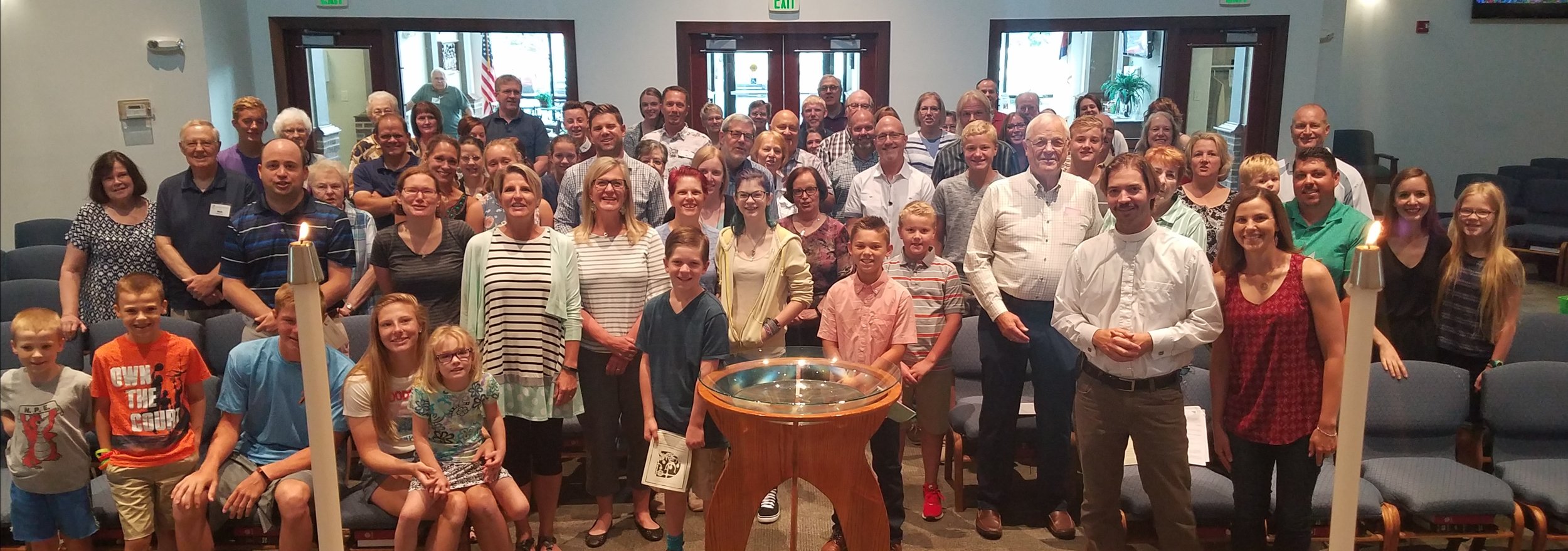
We are called to love one another in ways that are surprising and difficult and open-armed and without boundaries. We are called to love one another in the face of the world’s limited expectations and in spite of what may even make sense a lot of the time. We are called to create a family in the name of Jesus that might make us and others wonder if we’re not a little bit crazy every once in a while – just like the scribes wondered about Jesus back in the day.
I think that means we give more money and resources away for the sake of others, because people would think we were nuts. (Just like Jesus.)
I think that means we let more people in – so that the line for communion on Sunday morning would make people wonder if they were in church, or at the bar, in prison, or at the hospital. Wouldn’t that be crazy? (Just like Jesus.)
I think that means we start thinking differently about extreme poverty; about violence against women and children; about racism, sexism, consumerism, homophobia; about a climbing suicide rate; about the next school shooting; the rate at which people die every day of preventable, treatable diseases like malaria, AIDS, and from lack of clean water; about whatever in the world is happening to families at our southern border.
And I think we will do that best – and most faithfully – if and when we start believing and behaving as though all of it is happening to our own children, in our own house, at our own schools, and in our own Church – because it is and because it does when we see ourselves as brothers and sisters of Christ – when we see ourselves as family – and when we mean it the way Jesus expects we should.
And when we do that – when we expand the definition and expectation of who we experience to be our brothers and sisters – our children – the Kingdom of God will happen among us, the Kingdom of God will happen through us, the Kingdom of God will happen for us, and for the sake of the world – for our own family and for God’s family, just the same.
Amen