
Matthew 21:1-11
When they had come near Jerusalem and had reached Bethphage, at the Mount of Olives, Jesus sent two disciples, saying to them, ‘Go into the village ahead of you, and immediately you will find a donkey tied, and a colt with her; untie them and bring them to me. If anyone says anything to you, just say this, “The Lord needs them.” And he will send them immediately.’ This took place to fulfil what had been spoken through the prophet, saying,
‘Tell the daughter of Zion,
Look, your king is coming to you,
humble, and mounted on a donkey,
and on a colt, the foal of a donkey.’
The disciples went and did as Jesus had directed them; they brought the donkey and the colt, and put their cloaks on them, and he sat on them. A very large crowd spread their cloaks on the road, and others cut branches from the trees and spread them on the road. The crowds that went ahead of him and that followed were shouting,
‘Hosanna to the Son of David!
Blessed is the one who comes in the name of the Lord!
Hosanna in the highest heaven!’
When he entered Jerusalem, the whole city was in turmoil, asking, ‘Who is this?’ The crowds were saying, ‘This is the prophet Jesus from Nazareth in Galilee.’
What’s your favorite parade? From the Macy’s Day Parade to Mardi Gras, St. Patrick’s Day, and countless Independence Day celebrations, we Americans love parades. Some of my favorite childhood memories are from attending or marching in one. Growing up in Anderson, we had the Midnight Parade. It was on the night of July 3rd, but it started at midnight, claiming to be the first July 4th parade in all the land.
I loved watching the civic groups march along the route, many I would have never known existed had it not been for the parade. I remember the joy of little kids getting so excited about terrible candy thrown at their feet. Who knew Tootsie Rolls and Airheads could make someone so happy?
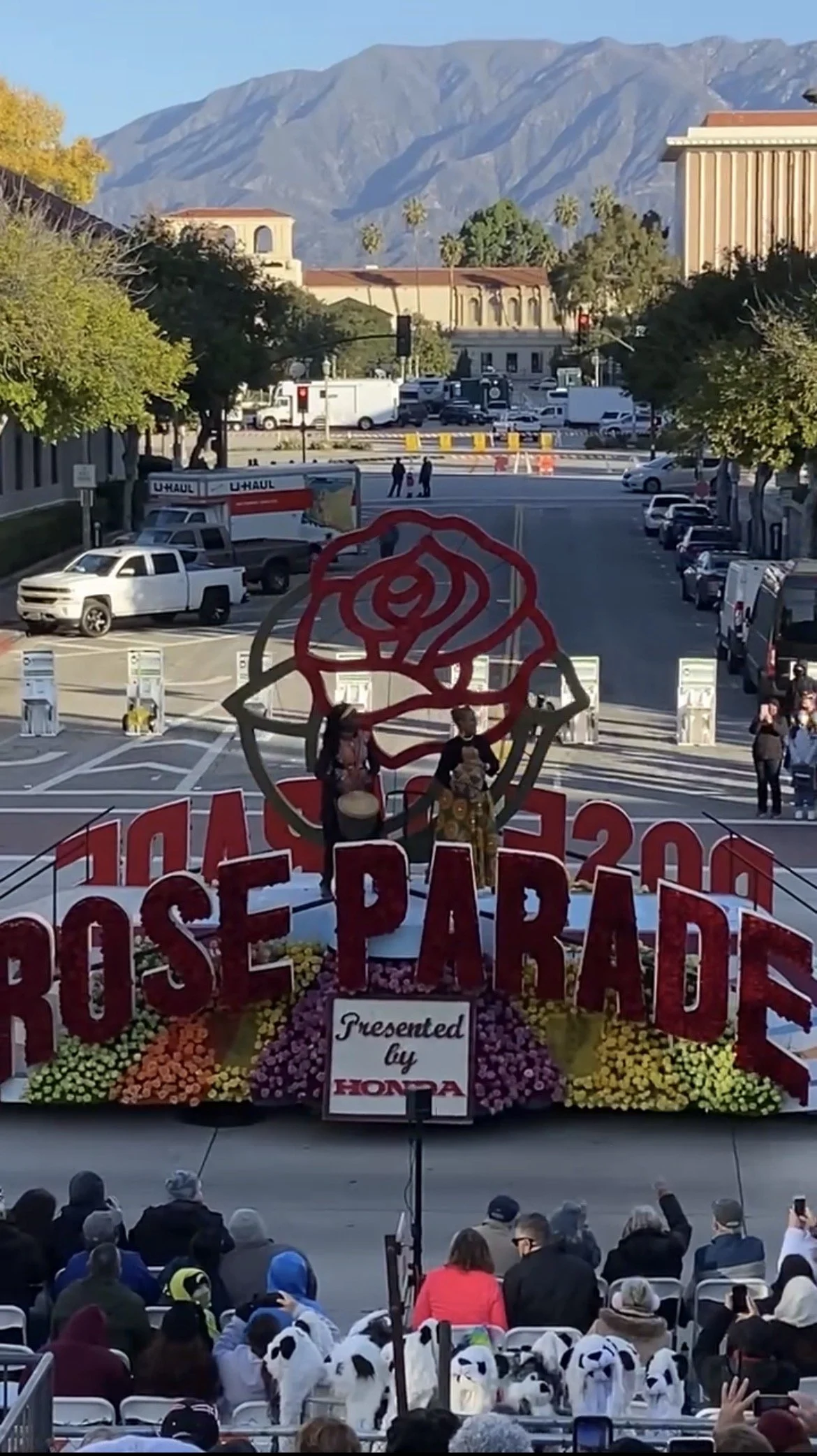
Most special of all was when we surprised my mom with tickets to the Rose Parade in Pasadena. Every New Year’s Day it was on in our house growing up. As we watched, she always said, “Can’t you just smell it? I bet the smell is amazing.” And the parade did not disappoint. The floats were extraordinary, the bands terrific, and the smell indeed was amazing.
Every parade tells a story — a story of identity, values, and heritage. Mardi Gras tells a story of joy, indulgence, and fun. Pride tells a story of celebration, love, and identity. The Rose Parade tells a story of creation and beauty.
And what makes a parade good is that it draws you in. You don’t want to just watch it. You want to be part of it, not just a spectator. The people of Jesus’ time were no strangers to parades. Because if one ancient people can be credited with the culture of parades, it’s the Romans. They were known for their grand displays of power.
One example was called the Adventus. That’s when a Roman governor or emperor entered a city under Roman control. First came the golden eagle — the symbol of Rome. Then banners and battle flags with Roman gods on them. Then the trumpeters announcing their arrival. Then the display of power: cavalry and foot soldiers dressed in full armor. And then finally came the governor or emperor himself, riding a war horse or chariot. And behind him, chained prisoners — living proof of Rome’s power.
The Adventus parade told a story that was very clear: Rome is in charge. Rome has power. Rome wins. The Jews of Judea, including Jesus, were familiar with Adventus, because that’s how Pontius Pilate would have entered Jerusalem for Passover. Pilate didn’t actually live in Jerusalem. He lived in a Roman city near the coast. But every year, during Passover, he would come to Jerusalem.
Because Passover made Roman officials nervous. It was a celebration of liberation from oppression under Pharaoh. And Pilate knew people might take that opportunity to protest their oppression under Caesar. So to remind everyone who was in charge, who had the power, Pilate would hold an Adventus. Coming from Caesarea, this huge procession would have entered Jerusalem from the west, quelling even the idea of an uprising.
But there was another parade into Jerusalem, this one coming from the East. Jesus and his disciples were in Bethphage when he made an unusual request: Go into the next little town and bring me a donkey and her colt. Matthew even tells us Jesus somehow sits on both of them, which is a little odd and maybe even a little funny to picture. But that’s not really the point.
Matthew tells us this happened to fulfill the words of the prophet Zechariah: “Look, your king is coming to you, humble and riding on a donkey.” Jesus isn’t just finding a ride into town. He is making a statement. He is telling the people exactly who he is. He is the one they have been waiting for.
And thus begins the parade. With no flags or banners to wave, they take off their cloaks and line the street with them. There are no drums, just the sound of branches snapping off trees and being spread along the road. And the only music is the crowd shouting, “Save us, Son of David! Save us!” That’s what Hosanna means: save us, please.
This was a crowd of poor peasants, hurting under the occupation of Rome. And finally here comes their hope — the one they call Son of the king, the rightful heir to the throne; coming to overthrow Rome and restore the kingdom of David, just like his ancestor talked about, like his own mother sang about.
Now that’s a story. That’s a parade that draws you in, one you want to be a part of, not just a spectator. I guess that’s why we reenact this parade with palms of our own every year. We find ourselves in that crowd. We may not be poor peasants under Roman occupation, but we still know things are not as they should be. We need a change. We too want to crown Jesus. We too shout Hosanna — save us, O God.
Save us from war and division.
Save us from hatred and injustice.
Save us from everything that keeps this world from being what you created it to be.
I wonder when the crowd realized that their parade was not what they thought it was. When did it register that what they wanted Jesus to do and what Jesus was about to do were two very different things? At some point in the week ahead, the crowd is going to realize that their hope isn’t going to play out like they thought it would.
I imagine at some point they wandered over to the west side of town. Maybe they saw the Adventus, Pilate with all his power entering the city. Or maybe they just heard about it — the horses, the soldiers, the brute force. That parade lured them in. It told them a story, veiled in threats, about how the world works: a world governed by strength and power.
Pretty soon after that parade of branches and cloaks, the crowd remembered Jesus on a donkey and compared that to Pilate’s parade, Rome’s parade, and realized he didn’t stand a chance.
They weren’t in a parade on the east side of Jerusalem that day. They were in a funeral procession, following the hearse the whole time.
So they switch sides. And in just a few short days they will go from “Save us!” to “Kill him,” from hail him to nail him.
We are still in that same crowd. It’s tempting to think we would have stayed by Jesus’ side, that we would have understood, that we would have been different. But we are the same crowd. We want a savior who fixes things, who wins, who makes life easier, who proves we are right and our side is right. We want a powerful king, not a crucified rebel. We want victory, not sacrifice. We want resurrection, but we would really prefer to skip Good Friday.
And when Jesus doesn’t do what we want, we start looking for another parade to join. But Jesus never wanted to be king, at least not the way the world understands kings. His goal was never to display power, but to redefine it; passing on the crown so that he could pick up a cross instead.
So this Holy Week, stay in the crowd. You’ve already started in the parade. You’re already a participant in this story. So go a bit deeper. Gather with Jesus and the disciples around the table as we remember the Last Supper and celebrate First Communion with some young partners in mission.
Walk all the way to Golgotha on Good Friday. Hear the chants of “Crucify him.” See how the same people who shouted Hosanna put Jesus on a cross.
But the parade doesn’t stop there. If we follow Jesus all the way, we will find ourselves at an empty tomb. And we will realize the parade wasn’t just a funeral procession, but an inauguration, where Jesus is crowned not as a king, but as the savior; defeating sin and death not by power and force, but by obedience, humility, and above all, grace… Which he hands out like candy, freely to anyone who wants to grab it.
That’s my favorite parade. Not one of power. But one of grace.
Amen.
