
John 4:4-42
Jesus left Judea and started back to Galilee. But he had to go through Samaria. So he came to a Samaritan city called Sychar, near the plot of ground that Jacob had given to his son Joseph. Jacob’s well was there, and Jesus, tired out by his journey, was sitting by the well. It was about noon.
A Samaritan woman came to draw water, and Jesus said to her, “Give me a drink.” (His disciples had gone to the city to buy food.) The Samaritan woman said to him, “How is it that you, a Jew, ask a drink of me, a woman of Samaria?” (Jews do not share things in common with Samaritans.)
Jesus answered her, “If you knew the gift of God and who it is that is saying to you, ‘Give me a drink,’ you would have asked him, and he would have given you living water.” The woman said to him, “Sir, you have no bucket, and the well is deep. Where do you get that living water? Are you greater than our ancestor Jacob, who gave us the well and with his sons and his flocks drank from it?”
Jesus said to her, “Everyone who drinks of this water will be thirsty again, but those who drink of the water that I will give them will never be thirsty. The water that I will give will become in them a spring of water gushing up to eternal life.” The woman said to him, “Sir, give me this water, so that I may never be thirsty or have to keep coming here to draw water.”
Jesus said to her, “Go, call your husband, and come back.” The woman answered him, “I have no husband.” Jesus said to her, “You are right in saying, ‘I have no husband,’ for you have had five husbands, and the one you have now is not your husband. What you have said is true!”
The woman said to him, “Sir, I see that you are a prophet. Our ancestors worshiped on this mountain, but you say that the place where people must worship is in Jerusalem.”
Jesus said to her, “Woman, believe me, the hour is coming when you will worship the Father neither on this mountain nor in Jerusalem. You worship what you do not know; we worship what we know, for salvation is from the Jews. But the hour is coming and is now here when the true worshipers will worship the Father in spirit and truth, for the Father seeks such as these to worship him. God is spirit, and those who worship him must worship in spirit and truth.”
The woman said to him, “I know that Messiah is coming” (who is called Christ). “When he comes, he will proclaim all things to us.” Jesus said to her, “I am he, the one who is speaking to you.”
Just then his disciples came. They were astonished that he was speaking with a woman, but no one said, “What do you want?” or, “Why are you speaking with her?” Then the woman left her water jar and went back to the city. She said to the people, “Come and see a man who told me everything I have ever done! He cannot be the Messiah, can he?” They left the city and were on their way to him.
Many Samaritans from that city believed in him because of the woman’s testimony, “He told me everything I have ever done.” So when the Samaritans came to him, they asked him to stay with them, and he stayed there two days. And many more believed because of his word. They said to the woman, “It is no longer because of what you said that we believe, for we have heard for ourselves, and we know that this is truly the Savior of the world.”
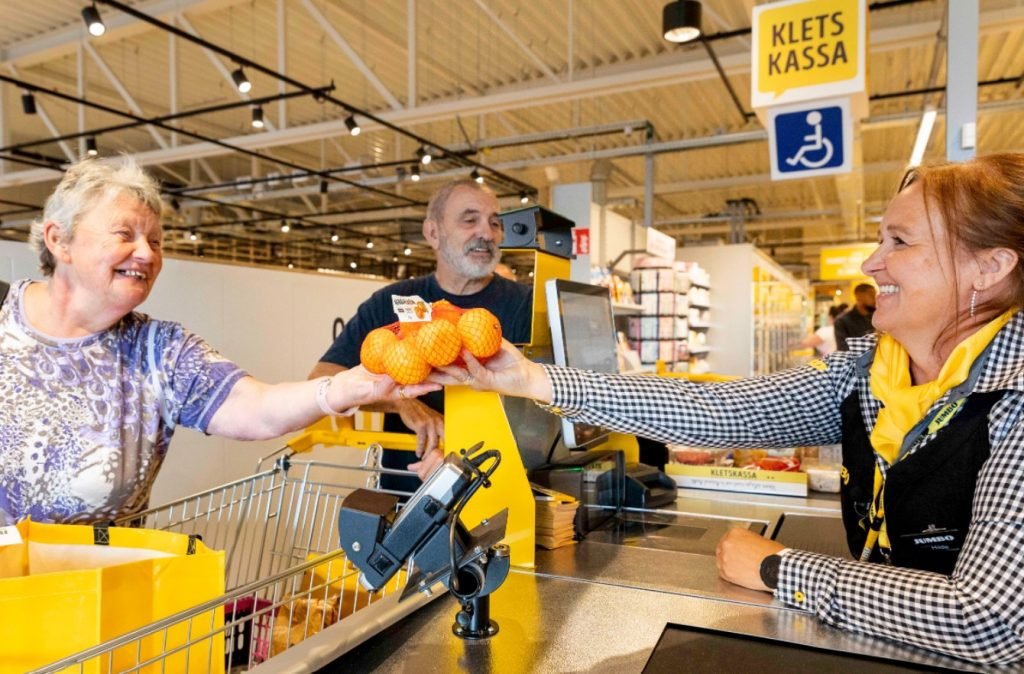
In 2019, Jumbo’s, a Netherlands supermarket chain, introduced Kletskassas, slow checkout lanes that encourage conversations and human connection. The goal is the opposite of what you normally want at a check line, but for good reason. They are a part of the Netherlands public health campaign to lessen loneliness and help people feel like they matter, one long conversation.
This week, I heard and read in many places how we are in a crisis of mattering. In her new book by the same name, journalist Jennifer Breheny Wallace describes mattering as feeling valued by others
And having the opportunity to add value back to the world around us. She argues it is an even deeper need than other core needs such as purpose or belonging. One might belong to a workplace, a family, or a church and still not feel like they matter to the people there.
Wallace believes that young people are struggling with mattering more than anyone—that this need is going unmet for them. After hundreds of interviews, she heard over and over how young people felt they only mattered when their GPA was high, the number on the scale was low, when they had a certain number of likes or views on social media, or they were a top athlete.
But by no means is the crisis of mattering limited to young people. Nearly anyone who has gone through a major transition has struggled with the question: Do I matter?
You worked for 35 or 40 years and suddenly, one day, it all stops. You cared for a child or children in your home every day, and then they moved out. You made nearly every decision in life with a spouse but then left to make those decisions alone. We are familiar with this feeling of mattering.
And with the rise of AI and the threat of it replacing more jobs and roles, the question of mattering will only become more poignant and prevalent. Jesus—and thereby the church—have something to say about this crisis, and we see it in the story of the Samaritan woman at the well. Mattering is at the heart of this story.
But in order for us to really see that, we have to remember last week—when Jesus was approached by Nicodemus. Near the end of their conversation, Jesus tells him that God loves the whole world.
This encounter with the woman at the well reveals just how encompassing God’s love really is.
Jesus is leaving Jerusalem and heading back to Galilee when we’re told he had to go through Samaria. As you can see, Samaria is immediately north of Judea and the fastest way to get to Galilee. But most Jews did everything they could to avoid traveling through that land, lest they come into contact with a Samaritan. Usually they would cross over the Jordan River and then go up. So this necessity of Jesus is not geographical, but theological.
Samaritans were already despised outsiders—idolaters even—seen as a lowly, unclean enemy.
Women were lower in social status than men, especially women who were not married. Jesus arrives at a well at noon and here comes someone the world didn’t think mattered at all: An unmarried Samaritan woman coming to quench her thirst just like Jesus.
She could not be more at odds with Nicodemus: a male, Jewish religious leader (who came at night, mind you). If anyone mattered, it was him. His words held value. He had status. The woman, who isn’t even given a name, does not.
Yet Jesus engages both of them.
In fact, the conversation Jesus has with the woman is the longest conversation he has with anyone.
Ironically, a long conversation was precisely what the woman was trying to avoid. That’s one reason she went to the well at noon—the hottest part of the day, if I had to guess.
To be clear, we don’t know exactly why she’s there at noon. There could be all kinds of reasons. One of them is NOT because she’s an ostracized tramp, hated by the other women of Sychar. Yes she had five husbands, but it’s not likely because of some scandalous reputation.
It is much more likely that this woman was passed from husband to husband through a mixture of divorce and death. And she keeps getting married because she has had no children—or at least no sons—to take care of her. So she ends up in what was called a levirate marriage, where a man is obligated to take care of his brother’s widow if the brother dies childless.
Not only is she a widow, but a barren one at that. The main thing that gave women value—what made women matter in the time of Jesus—she couldn’t do. I think she went to the well at noon because not only did she think others believed she didn’t matter, but she believed that about herself, too. And when you feel like that, when you believe that about yourself, you withdraw. You disengage.
But here is this man who breaks all the rules, who crosses all the boundaries, and asks for a drink.
A conversation unfolds where Jesus tries to help the woman understand who he is and what he can offer her, but it doesn’t click until he tells her everything about her.
In other words, he names the reason the world thinks she doesn’t matter—and the reason she believes she doesn’t matter. But instead of brushing her off, instead of rushing away, he leans in. He talks to her more. He even debates theology with her, and finally reveals himself as the Messiah, the very one she has been waiting for.
The woman rushes back to Sychar and tells the whole town what has happened. It’s amazing—this woman who avoided people suddenly can’t help but engage and share about the encounter she’s had with Jesus. If mattering means feeling valued and adding value back to the world, Jesus has given her exactly that.
This mattering crisis is indeed a crisis, but it’s nothing new. We have always failed to name who matters and why.
The world has long said women don’t matter—or that only their bodies matter, and only if they produce offspring.
In this country we have said, and continue to say in different ways, that Black and brown people don’t matter—or at least not as much as those who look like me.
In this capitalist society, we say that only those who contribute matter—and those who profit most matter most.
And over the last few years, we have said that anyone who isn’t from this country, or doesn’t look like they are, doesn’t matter.
And what does this war say about who matters and who doesn’t? What about the elementary girls bombed in Iran—did they matter? Were they a part of this world that God so loved?
This encounter with the woman at the well tells us that God loves everyone in this whole wide world—and that’s why they matter. Nothing more and nothing less. It does not matter what a person does or looks like, where they are from or what language they speak, what gender they are, or who they love.
For God so loved the whole world.
If you have ever felt like you don’t matter, I pray I am not the first to tell you that you do. To the queer kid in high school, the twice-divorced woman, the retired elderly man, the noisy child running in the halls—you matter.
And it has nothing to do with what you have done. In the kingdom of God you do not earn value, it’s freely given to you! We call it grace. And grace tells us You matter because Jesus shows us that every single person matters. You matter because God loves you.
We as a church can do something about this mattering crisis, and it’s to tell people they matter.
It sounds so simple, but it’s the message people need to hear. If the church does nothing else but have long conversations with people who think they don’t matter and then tell them that they are loved, kinda of like those checkout lanes in the Netherlands, we will be doing God’s work.
In this story, Jesus shows us something we cannot forget:
The woman at the well mattered.
Your neighbor matters.
You matter.
Because God so loved the world. Amen.
