
John 11:17-44
When Jesus arrived, he found that Lazarus had already been in the tomb four days. Now Bethany was near Jerusalem, some two miles away, and many of the Jews had come to Martha and Mary to console them about their brother. When Martha heard that Jesus was coming, she went and met him, while Mary stayed at home.
Martha said to Jesus, “Lord, if you had been here, my brother would not have died. But even now I know that God will give you whatever you ask of him.” Jesus said to her, “Your brother will rise again.” Martha said to him, “I know that he will rise again in the resurrection on the last day.” Jesus said to her, “I am the resurrection and the life. Those who believe in me, even though they die, will live, and everyone who lives and believes in me will never die. Do you believe this?” She said to him, “Yes, Lord, I believe that you are the Messiah, the Son of God, the one coming into the world.”
When she had said this, she went back and called her sister Mary and told her privately, “The Teacher is here and is calling for you.” And when she heard it, she got up quickly and went to him. Now Jesus had not yet come to the village but was still at the place where Martha had met him.
The Jews who were with her in the house consoling her saw Mary get up quickly and go out. They followed her because they thought that she was going to the tomb to weep there. When Mary came where Jesus was and saw him, she knelt at his feet and said to him, “Lord, if you had been here, my brother would not have died.” When Jesus saw her weeping and the Jews who came with her also weeping, he was greatly disturbed in spirit and deeply moved.
He said, “Where have you laid him?” They said to him, “Lord, come and see.” Jesus began to weep. So the Jews said, “See how he loved him!” But some of them said, “Could not he who opened the eyes of the blind man have kept this man from dying?”
Then Jesus, again greatly disturbed, came to the tomb. It was a cave, and a stone was lying against it. Jesus said, “Take away the stone.” Martha, the sister of the dead man, said to him, “Lord, already there is a stench because he has been dead four days.” Jesus said to her, “Did I not tell you that if you believed you would see the glory of God?” So they took away the stone. And Jesus looked upward and said, “Father, I thank you for having heard me. I knew that you always hear me, but I have said this for the sake of the crowd standing here, so that they may believe that you sent me.”
When he had said this, he cried with a loud voice, “Lazarus, come out!” The dead man came out, his hands and feet bound with strips of cloth and his face wrapped in a cloth. Jesus said to them, “Unbind him, and let him go.”
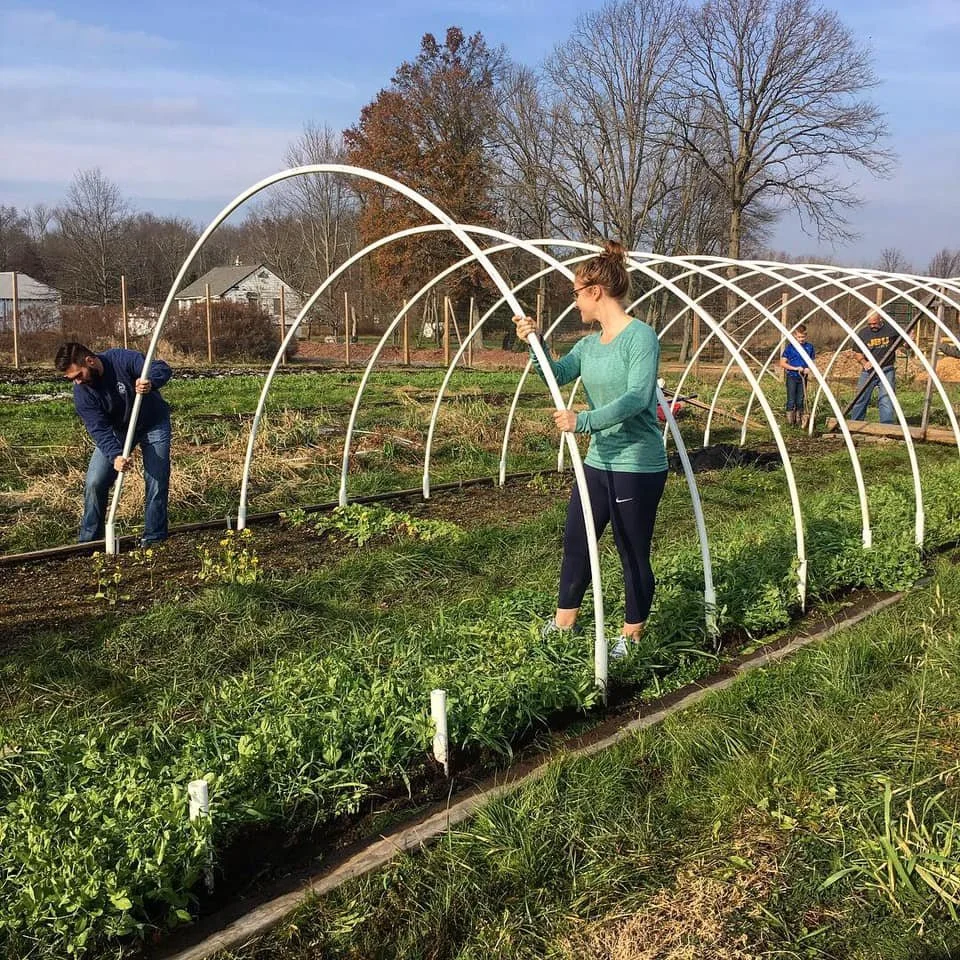
I hate bagged salad. To this day, I can still remember the: like fermented lettuce soaked in apple cider vinegar and cat pee. It was putrid. Pallets of it were taken to the farm every week. You’ve probably heard me talk about the farminary before: farm plus seminary equals farminary. It was agriculture and theological education wrapped into one. Before my first class started, I had grand ideas about what the farminary would be like: romanticized thoughts about growing a huge, flourishing garden that would compete with Eden.
On the first day of class, Nate Stucky, our professor and director of the farminary, led us to our first hands-on agricultural assignment. It wasn’t tilling rows, planting seeds, and certainly not picking any harvest. Instead, he led us to the compost pile and a pallet of bagged salad swarming with flies. Even now, I am convinced you could see green streaks of stench floating above it like in a cartoon.
Nate told us, “Today you continue to help bring this farm back to life.”
Before the farminary began, the land had been a sod farm and a Christmas tree farm. Both of those stripped the land of the good, rich soil, leaving behind infertile dirt that no one wanted. Nate knew when he began the farminary that the first thing he had to do was bring the soil back to life.
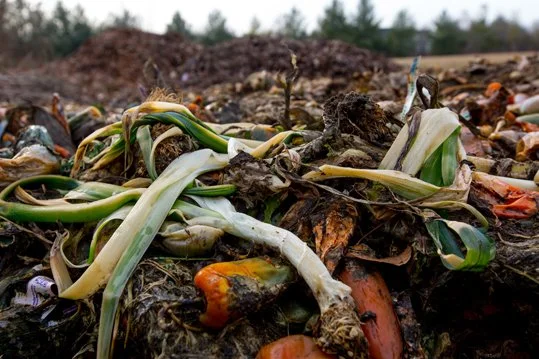
Which meant students like me spent much of our time at the compost pile, ripping open thousands of bagged salad kits, dumping the contents onto the pile, and turning it over and over. And it wasn’t just rotten lettuce. Food waste from the dining hall. Coffee grounds from a local shop. Leaves from last fall. All of it together—a giant pile of smelly, dying compost—was what brought life to this barren land.
When we stirred it all up and revealed the black soil at the bottom, Nate would say, “That’s resurrection.”
The obvious, yet difficult thing about resurrection is that it requires death first. Most of us approach death like either Martha or Mary.
Martha approaches it with hope. She is certainly grieved by her brother’s death—“Lord, if you had been here…” but at the same time she remembers the promises she’s heard her whole life about resurrection and life everlasting. So she responds with hope for the future: “God will do what you ask, and I know there will be resurrection someday.”
But Jesus wants Martha to have hope in this life, not just the next.
So he says, “I am the resurrection and the life. Do you believe this?” Jesus takes those promises we know in our heads and puts a face to them. In moments of loss and crisis and death, what matters most is not just what you know, but who you know—who you trust. You know about resurrection, Jesus says, but do you believe I am the one who brings life now, not just someday?
Mary, on the other hand, comes with no speeches, no theology, no future hope. She says the same words as her sister, but without the reassurance: “Lord, if you had been here…” I imagine her angry and sad, crying on her knees, repeating that line over and over. Jesus doesn’t correct her or explain anything.
He just meets her tears with his own.
I find it comforting that Jesus seems to meet each sister where she is—strengthening Martha’s hope while sitting in Mary’s despair. Because whether we come with hope or with anger, with faith or with tears, Jesus still walks us to the tomb.
Because it’s there at the tomb, in deep grief and pain, that Jesus reveals his glory. With the stench of death in the air, Jesus says to Martha, “Did I not tell you that if you believed, you would see the glory of God?” What Jesus is telling Martha, and us, is that the glory of God is revealed in resurrection:
not just when hearts start beating again, but whenever something we thought was dead begins to live again.
Yes, Lazarus is raised, but God’s glory is seen in anything that has been treated like it’s dead but brought back to life. In the things we have grieved, mourned, and wept over, but that somehow lives again. In the stuff that is rotting and stinking, yet somehow comes back to life. We can see this glory all around us.
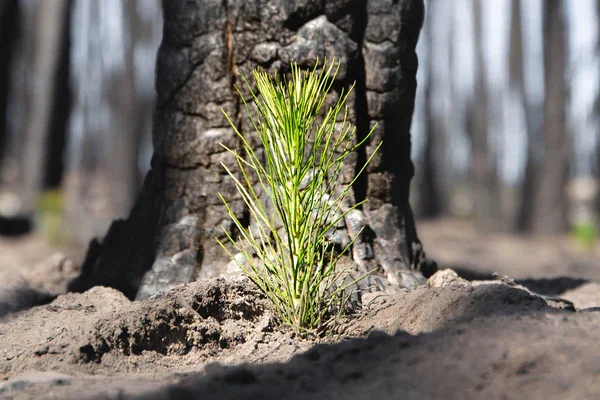
If you’ve ever been out west to Yellowstone National Park, one of the most common trees you’ll see is the lodgepole pine. When fires come through the park, they burn the trees and scorch the earth below. But in the heat, the pines release their resin-sealed seeds onto the ground. The flames melt the resin, the underbrush is cleared away, and out of the ashes rise new trees. What looks like destruction is actually preparation for new life.
Death and resurrection. The glory of God.
Or consider the Martindale–Brightwood neighborhood right here on the near northeast side of Indianapolis. Once a thriving neighborhood for middle-class Black families, it was systematically devastated by redlining and pollution, left to decay. But for decades now, churches, neighbors, and the Martindale–Brightwood Community Development Corporation have been working together to bring affordable housing, access to food, jobs, and mentoring for youth to the area—all signs of new life. It’s not a story of a thriving area, yet. But I bet Lazarus wasn’t running a marathon the next day. It’s slow, but it’s still death and resurrection. The glory of God.
Think of your own life: a relationship once shattered is revived; a career thoroughly burned is brought back from the ashes; a love of God rekindled after years of church hurt and deconstruction.
Each one an example of resurrection.
The glory of God is seen in the dead, rotten, smelly, sealed-up places because that’s where new life is called forth. If we want resurrection, then we can’t be offended by a little stench. We can’t be too scared of death, because the two go together.
And resurrection isn’t something we just witness. We are invited to get involved. Jesus says to those gathered there, “Unbind him and let him go.” Jesus does the raising, but he tells the community to do the unbinding.Resurrection is God’s work. But unbinding… that’s the church’s work. That’s our work
And we are already trying to do this in our own way. Through our Outreach Grants, through our support of Project Rouj, through investing in people and places that are overlooked, we are helping unbind what God is bringing back to life. We are saying this is not over yet. There is still life here.
Sometimes unbinding looks like helping a neighborhood come back to life.
Sometimes it looks like walking with someone through grief or addiction or failure until they can stand again, like our Stephen Ministers do.
Sometimes it’s forgiveness, cutting the grave clothes off a relationship that was assumed over.
Unbinding is helping people live again. And that is the work Jesus gives to the church: to go to the places of death and look for signs of new life.
So let’s rip open the bag.
Pour out the rot.
Stir the pile.
Take in the smell,
looking for signs of life,
for the glory of God.
And once we see it,
unbind it,
let it go,
and spread it around.
God has brought back to life
that which was dead.
And we have seen God’s glory,
alive and well,
here and now.
Amen.
