
Gospel of Matthew

Parade of Grace

Parade of Grace
Pastor Cogan

Matthew 21:1-11

When they had come near Jerusalem and had reached Bethphage, at the Mount of Olives, Jesus sent two disciples, saying to them, ‘Go into the village ahead of you, and immediately you will find a donkey tied, and a colt with her; untie them and bring them to me. If anyone says anything to you, just say this, “The Lord needs them.” And he will send them immediately.’ This took place to fulfil what had been spoken through the prophet, saying,

‘Tell the daughter of Zion,
Look, your king is coming to you,
humble, and mounted on a donkey,
and on a colt, the foal of a donkey.’

The disciples went and did as Jesus had directed them; they brought the donkey and the colt, and put their cloaks on them, and he sat on them. A very large crowd spread their cloaks on the road, and others cut branches from the trees and spread them on the road. The crowds that went ahead of him and that followed were shouting,

‘Hosanna to the Son of David!
Blessed is the one who comes in the name of the Lord!
Hosanna in the highest heaven!’

When he entered Jerusalem, the whole city was in turmoil, asking, ‘Who is this?’ The crowds were saying, ‘This is the prophet Jesus from Nazareth in Galilee.’


What’s your favorite parade? From the Macy’s Day Parade to Mardi Gras, St. Patrick’s Day, and countless Independence Day celebrations, we Americans love parades. Some of my favorite childhood memories are from attending or marching in one. Growing up in Anderson, we had the Midnight Parade. It was on the night of July 3rd, but it started at midnight, claiming to be the first July 4th parade in all the land. 
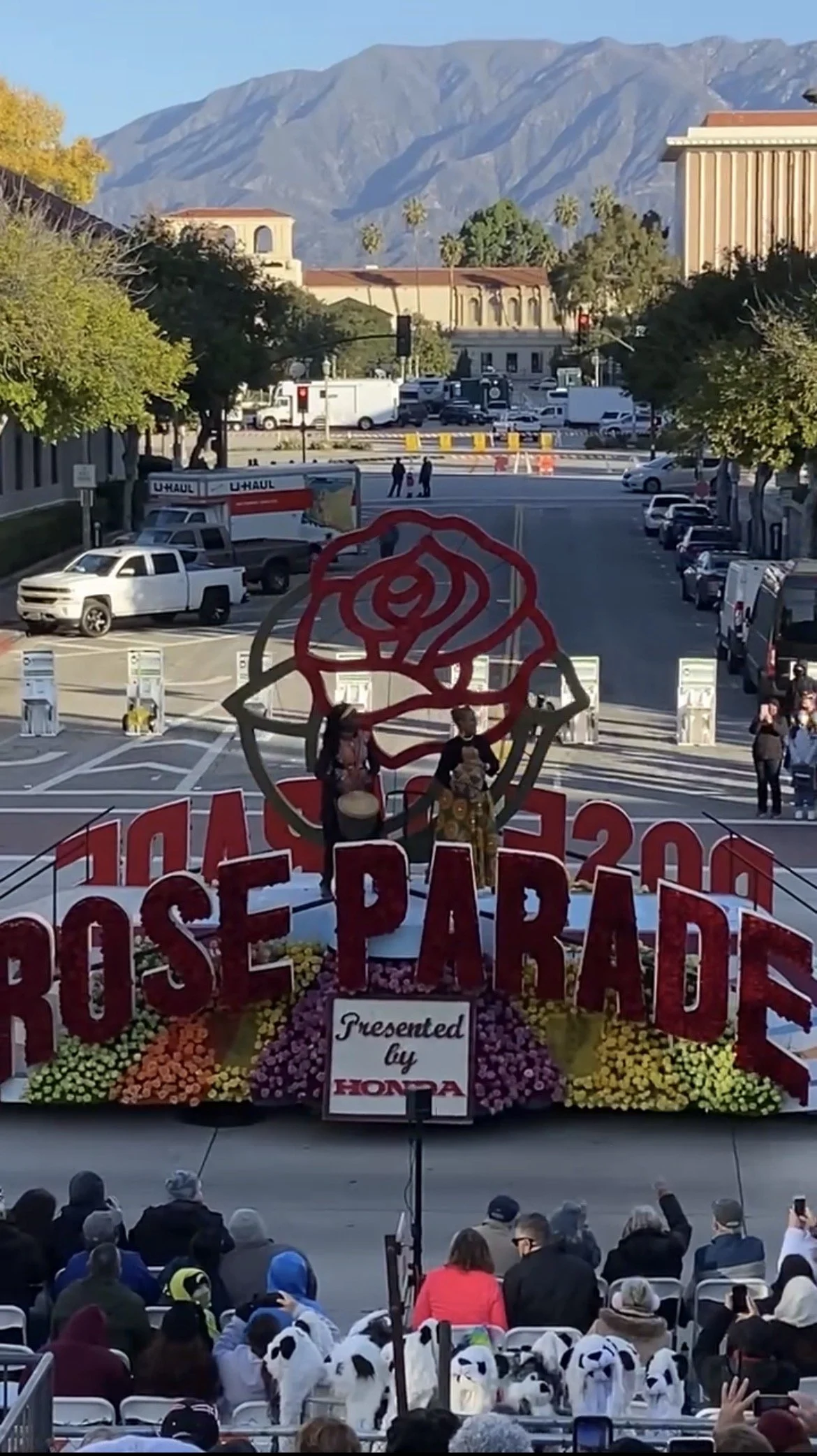
I loved watching the civic groups march along the route, many I would have never known existed had it not been for the parade. I remember the joy of little kids getting so excited about terrible candy thrown at their feet. Who knew Tootsie Rolls and Airheads could make someone so happy?

Most special of all was when we surprised my mom with tickets to the Rose Parade in Pasadena. Every New Year’s Day it was on in our house growing up. As we watched, she always said, “Can’t you just smell it? I bet the smell is amazing.” And the parade did not disappoint. The floats were extraordinary, the bands terrific, and the smell indeed was amazing.

Every parade tells a story — a story of identity, values, and heritage. Mardi Gras tells a story of joy, indulgence, and fun. Pride tells a story of celebration, love, and identity. The Rose Parade tells a story of creation and beauty.

And what makes a parade good is that it draws you in. You don’t want to just watch it. You want to be part of it, not just a spectator. The people of Jesus’ time were no strangers to parades. Because if one ancient people can be credited with the culture of parades, it’s the Romans. They were known for their grand displays of power.

One example was called the Adventus. That’s when a Roman governor or emperor entered a city under Roman control. First came the golden eagle — the symbol of Rome. Then banners and battle flags with Roman gods on them. Then the trumpeters announcing their arrival. Then the display of power: cavalry and foot soldiers dressed in full armor. And then finally came the governor or emperor himself, riding a war horse or chariot. And behind him, chained prisoners — living proof of Rome’s power.

The Adventus parade told a story that was very clear: Rome is in charge. Rome has power. Rome wins. The Jews of Judea, including Jesus, were familiar with Adventus, because that’s how Pontius Pilate would have entered Jerusalem for Passover. Pilate didn’t actually live in Jerusalem. He lived in a Roman city near the coast. But every year, during Passover, he would come to Jerusalem.

Because Passover made Roman officials nervous. It was a celebration of liberation from oppression under Pharaoh. And Pilate knew people might take that opportunity to protest their oppression under Caesar. So to remind everyone who was in charge, who had the power, Pilate would hold an Adventus. Coming from Caesarea, this huge procession would have entered Jerusalem from the west, quelling even the idea of an uprising.

But there was another parade into Jerusalem, this one coming from the East.  Jesus and his disciples were in Bethphage when he made an unusual request: Go into the next little town and bring me a donkey and her colt. Matthew even tells us Jesus somehow sits on both of them, which is a little odd and maybe even a little funny to picture. But that’s not really the point.

Matthew tells us this happened to fulfill the words of the prophet Zechariah: “Look, your king is coming to you, humble and riding on a donkey.” Jesus isn’t just finding a ride into town. He is making a statement. He is telling the people exactly who he is. He is the one they have been waiting for.

And thus begins the parade. With no flags or banners to wave, they take off their cloaks and line the street with them. There are no drums, just the sound of branches snapping off trees and being spread along the road. And the only music is the crowd shouting, “Save us, Son of David! Save us!” That’s what Hosanna means: save us, please.

This was a crowd of poor peasants, hurting under the occupation of Rome. And finally here comes their hope — the one they call Son of the king, the rightful heir to the throne; coming to overthrow Rome and restore the kingdom of David, just like his ancestor talked about, like his own mother sang about.

Now that’s a story. That’s a parade that draws you in, one you want to be a part of, not just a spectator. I guess that’s why we reenact this parade with palms of our own every year. We find ourselves in that crowd. We may not be poor peasants under Roman occupation, but we still know things are not as they should be.  We need a change. We too want to crown Jesus. We too shout Hosanna — save us, O God.

Save us from war and division.
Save us from hatred and injustice.
Save us from everything that keeps this world from being what you created it to be.

I wonder when the crowd realized that their parade was not what they thought it was. When did it register that what they wanted Jesus to do and what Jesus was about to do were two very different things? At some point in the week ahead, the crowd is going to realize that their hope isn’t going to play out like they thought it would. 

I imagine at some point they wandered over to the west side of town. Maybe they saw the Adventus, Pilate with all his power entering the city. Or maybe they just heard about it — the horses, the soldiers, the brute force. That parade lured them in. It told them a story, veiled in threats, about how the world works: a world governed by strength and power.

Pretty soon after that parade of branches and cloaks, the crowd remembered Jesus on a donkey and compared that to Pilate’s parade, Rome’s parade, and realized he didn’t stand a chance.

They weren’t in a parade on the east side of Jerusalem that day. They were in a funeral procession, following the hearse the whole time.

So they switch sides. And in just a few short days they will go from “Save us!” to “Kill him,” from hail him to nail him.

We are still in that same crowd. It’s tempting to think we would have stayed by Jesus’ side, that we would have understood, that we would have been different. But we are the same crowd. We want a savior who fixes things, who wins, who makes life easier, who proves we are right and our side is right. We want a powerful king, not a crucified rebel. We want victory, not sacrifice. We want resurrection, but we would really prefer to skip Good Friday.

And when Jesus doesn’t do what we want, we start looking for another parade to join. But Jesus never wanted to be king, at least not the way the world understands kings. His goal was never to display power, but to redefine it; passing on the crown so that he could pick up a cross instead.

So this Holy Week, stay in the crowd. You’ve already started in the parade. You’re already a participant in this story. So go a bit deeper. Gather with Jesus and the disciples around the table as we remember the Last Supper and celebrate First Communion with some young partners in mission. 

Walk all the way to Golgotha on Good Friday. Hear the chants of “Crucify him.” See how the same people who shouted Hosanna put Jesus on a cross.
But the parade doesn’t stop there. If we follow Jesus all the way, we will find ourselves at an empty tomb. And we will realize the parade wasn’t just a funeral procession, but an inauguration, where Jesus is crowned not as a king, but as the savior; defeating sin and death not by power and force, but by obedience, humility, and above all, grace… Which he hands out like candy, freely to anyone who wants to grab it.

That’s my favorite parade. Not one of power. But one of grace.

Amen.

Same Devil

Same Devil
Pastor Mark Havel

Matthew 4:1-11

Then Jesus was led up by the Spirit into the wilderness to be tempted by the devil. He fasted forty days and forty nights, and afterwards he was famished. The tempter came and said to him, “If you are the Son of God, command these stones to become loaves of bread.” But he answered, “It is written,‘One does not live by bread alone, but by every word that comes from the mouth of God.’”

Then the devil took him to the holy city and placed him on the pinnacle of the temple, saying to him, “If you are the Son of God, throw yourself down; for it is written, ‘He will command his angels concerning you,’ and ‘On their hands they will bear you up, so that you will not dash your foot against a stone.’ ” Jesus said to him, “Again it is written, ‘Do not put the Lord your God to the test.’ ”

Again, the devil took him to a very high mountain and showed him all the kingdoms of the world and their splendor; and he said to him, “All these I will give you, if you will fall down and worship me.” Jesus said to him, “Away with you, Satan! for it is written, ‘Worship the Lord your God, and serve only him.’ ” Then the devil left him, and suddenly angels came and waited on him.


Some of you might have seen my Facebook post last week about how I was listening to Brandi Carlile in preparation for the show Christa and I saw on Friday, up in Chicago. (Brandi Carlile sings “The Story” that we sang in worship last year every Wednesday, during Lent. She’s the woman who sang “America the Beautiful” before the Super Bowl a couple of weeks, too. She’s one of my favorites.) Anyway, with today’s Gospel on my brain, my concert-prep turned into sermon-prep when her duet with Brandy Clark showed up in my playlist by way of a song called, “Same Devil.”

Among other things, in this song about the way evil sneaks into our lives the Brandies sing:

Everybody’s got some kind of hell
Just different levels
Different demons
Same devil

He don't knock
He walks right in
And if you're not watchin'
You'll run right into him

Same wrong, different right
Different tunnel, same bright light
Everybody lookin' for God on every level
Different demons
Same damn devil

It felt like the universe and my Spotify playlist were on the same page as the lectionary and this perennial story of Jesus’ temptation showed up at the beginning of another Lent.

And as we live into and begin this season of Lent together, as we consider a journey to the Cross of Good Friday and as we look forward to the hope of Easter, what does this little game of “Truth or Dare” between Jesus and the Devil have to do with us? What does this duel of wit and willpower, good and evil, Truth and temptation have to do with you or with me?

For my money, the power of this story comes in its persistent relevance – the nearness of this devil and the evil he represents; these temptations that belong to us just as much as they showed up for Jesus; the way we’re all “looking for God on every level,” as the song goes; how we each struggle with different demons, but it’s the same damn devil – the same evil of Sin and temptation – that dogs us all, that walks right in on every one of us, without knocking, at some time or another in our lives.

And the evidence of how prolific it is – this sin, this evil, this temptation – and the impact of our capacity to choose and fall victim to it, is everywhere.

Remember that unfaithful couple who got caught red-handed on the Kiss Cam at the Coldplay concert this summer? Their temptation – and its ramifications – were as public as it gets.

And did you see the controversy over that Canadian Olympic curler who, video evidence seems to show, just couldn’t resist poking that stone ever-so slightly and every-so slyly, over the line and outside of the rules?

And it can be deeper and darker than any of that, of course, too.

We’ve all heard about the man who shot and killed that police officer in Beech Grove, Brian Elliott, last week. What Devil … what Evil … what choices rolled around in his heart of hearts before he made the worst, wrong decision to pull the trigger last Monday evening?

And how about those social media oligarchs who are on trial for manipulating algorithms to influence the hearts and minds and lives of us all – and especially our young people – for the sake of more of our time, more of our allegiance, more of their money. What Devil of greed and power must be whispering in their ear and winning their allegiance in all of that?

And what about those Epstein Files? What ugly, depraved, sinful temptation crept into the mind and body of every grown man who’s name – redacted or not – released or still hidden – is listed in that infamous and evil treasure trove of sin?

Obviously, temptation and its results in the world surround us. All over the place, people are trying in all the wrong ways to prove their worth, to put their God to the test, to gain and abuse power, to test the limits of Sin.

In other words, too many take the dare every time. And sometimes, if we’re honest, the sort of cosmic “Truth or Dare” – this duel between truth and temptation – is even closer than the evening news.

I’m grateful and pray that most of us won’t ever have the chance to play this game on a world-sized stage or with such devastating results, but we’re familiar with the wilderness Jesus finds himself in this morning, are we not?

We can always measure and minimize our sinfulness against something as ugly and depraved as the Epstein Files, but we can also opt to misuse privilege and abuse power in ways that shame children or that take advantage of others unfairly.

We may not have the capacity to commit corporate-level fraud … but there’s always the option of being honest with our taxes; and we decide daily what “enough” is for us and with whom we will share our treasures – our God or our greed.

We may not have influence over something as grand as the Olympic games, but we are faced often with the opportunity to choose, to support, and to vote for fairness, equity, and justice.

We may never get caught cheating on the big screen at Madison Square Garden, but we make choices daily about whether to treat our spouses or significant others with integrity – or not.

Truth or Dare. The nature of the game has changed for those of us who find ourselves playing it NOT at birthday parties or in our pajamas at a sleep-over, but in our offices and in our schools and in our relationships and in our churches, too.

So maybe the greatest lesson we learn here is the simple fact that Jesus had to play this game, too. We’ve learned of Jesus’ coming to be with us – to be like us – as a baby in a manger. And we’re preparing to witness again that he died like we will, too. But it’s easy to forget that, in the meantime, even while he was preaching and teaching and healing and doing all kinds of miraculous things, Jesus was tempted and tested just like us as well.

The same damn devil that hounds us all … the same evil with which we contend … knocked on Jesus’ door, too.

But, thankfully, Jesus – as one of us – shows us how to play the game more faithfully. Jesus could have answered the temptations of evil by changing stones into bread and he could have jumped head-first off the top of the temple and lived, but where would that leave you and me? Who of us here can respond to temptation with that kind of power?

That’s why the hope for me in this morning’s Gospel is that Jesus dealt with the evil that confronted him without miracles, without relying on his own wisdom and without even his friends, his family and his disciples to help bail him out, that day in the wilderness. Jesus relied on nothing more and nothing less than his faith in the God who loved him, no matter what. The God who – at his baptism, not long before – had declared him beloved; and with whom God was already and always “well pleased.” And there’s hope in that good news for each of us.

Because of that, we get to see that faith is not only about miracles, grand gestures, and demonstrations of power – like the Devil likes to pretend. Jesus’ proved – even in the darkest moments of his temptations – in his solitude, when no one was looking – that faith is about nothing more and nothing less than relying on the Word, the promises, the Truth, and the love of God.

So I don’t know what your greatest temptations may be – the juicy stuff – vices of drink or drug or pornography or gambling, maybe. The small sacrifices some of us give up for Lent – chocolate, coffee, cursing, or social media, perhaps. (Frankly, I don’t believe God cares as much about those thing as the world likes to pretend – unless or until they do damage to our lives, our relationships, or to the world around us, of course.)

Maybe what tempts you is harder to see – the temptation to keep holding that grudge, or to refuse that forgiveness; the temptation to selfishness or pride or perfection; the temptation to let your fears and your grief trump your faith and your hope, too much of the time.

Whatever the case, Jesus shows us today that, because of his victory – not just that day in the wilderness but in his victory over the cross, too – that because he has already won the game between truth and temptation, between good and evil, between life and death, you and I get to play it all differently.

Because of his victory, new dares, new challenges and new lives are ours for the taking. Let us be tempted, then, to trust in our own forgiveness – so that we might share that kind of mercy with others. Let us be tempted to more gratitude and generosity. Let us be tempted to live knowing joy and hope and expectation of better things to come.

And let us be tempted to share, more often and more generously, an abundance of grace with ourselves, each other, and the world – not because we’re plagued by the same damn devil – but because we’re claimed by the same loving God, in Jesus Christ our Lord.

Amen